Gestation of a short story #1
What are Greenday talking about? I love September. With the exception of going back to school (which only bothers you if you actually have to go – teehee), September is a time of renewal, revival and getting around to things you put off til after the summer holidays.
In that spirit, over the next while, I will be tracking the development of my latest short story as I write it.
This story-to-be was inspired by that rich source of short story material: a passing comment, an almost-anecdote. The one I have in mind was told to me by someone I know, at least a year ago, on the subject of his childhood. There was an image in there that has stuck in my head ever since: A mother, father and their children are driving along in their car. The mother and father have had a row at home. Suddenly, the mother begins to sing happily.
What intrigues me about this little vignette is what it might say about the dynamics of family life and married life from a child’s viewpoint. Children can be highly perceptive and they can also misinterpret and over-interpret. How might one of the children interpret what is going on in this family on this day?
This series of blog posts tracks my efforts in building this story. Whether or not the story is a success (see how I’m covering myself there?), I hope it’ll be of interest to some to follow the process a writer can go through in an attempt to create a short story (obviously, there are many ways to do this – mine is only one).
***
Days 1 & 2
Physical environment – house sketch
After mulling over various possibilities for the story for a while, I develop a picture of the family at the centre of the story. The family – mother, father, and three or four children – lives in a big, chaotic house in a medium-sized town. The family’s life revolves around their shop. The small grocery shop is integrated into the house in the converted front downstairs room.
Part of the dynamics of the story is that the mother in the family runs several mini-businesses from within the home. The house is always being extended and modified to make room for each new business venture. So the house is always noisy and busy.
I realise that movement and the physical environment – all the family members moving around this big, chaotic, disorganised, confusing house – are key to the story. So I decide to sketch out a plan of the house. I want to be completely familiar with the layout of the house in my own mind, so that the characters’ movements around the house are consistent and flow smoothly.
This is my initial sketch (architects and technical drawing experts, look away now!):

Timeline
At this stage, the characters are still in their infancy in terms of development. Later, I will create detailed character sketches. Before that, I need to create a timeline for the family in the story. This is to ensure that all aspects of time in the story are correct and consistent. For example, to specify the age of each character, I need to know when they were born, and all the family members’ dates of birth have to be consistent with each other.
This is the rudimentary timeline I drew up (yes, on the back of an envelope – keeping it real!):

Practise paragraphs
By this stage (the end of day 2), I have also written a few disconnected paragraphs of the actual story. These are really sketches themselves, rough “practise” drafts to help me get an idea of how the story might look and sound.
What’s next?
The next steps are: fill out the timeline, create detailed character profiles, and identify key scenes. I’ll be moving forward with these tomorrow.
Beyond plain vanilla: Club Orange versus Lucozade Sport Lite

Shoelace... er, vanilla pod
In my local fancy-food store, a little glass vial containing a single vanilla pod, resembling a scrap of petrified shoelace, will set you back €5. Yes, that’s five euro. You almost feel like calling Securicor to bring it home for you.

Vanilla blossom
The price doesn’t seem so outrageous when you reflect on what it takes for each piece of petrified shoelace to reach your store cupboard. In the vanilla plantations of Madagascar and Reunion, each vanilla blossom has to be hand-fertilised on the vine. The pods are harvested, immersed in boiling water and repeatedly wrapped in straw for three to six months to “sweat”. The beans are then dried in the sun and left to ferment for up to two years. That’s how much time and effort it takes to produce the world’s best Madagascar Bourbon vanilla, the kind that when you carefully slice open the little pod, the aroma that invades the air is so complex and intoxicating it makes your head swim.
Then there’s the ubiquitous vanilla flavour we all grew up with. When cheap vanilla flavouring went global in the early twentieth century, the US dairy industry put vast resources into marketing vanilla ice cream. Soon, plain vanilla was the standard ice cream flavour. From there, thanks to its bland, sweet taste, artificial vanilla spread to other foods, particularly baby food. Plain vanilla became a byword for anything that was standard, de facto, safe.
I was reminded of the two facets of vanilla recently when watching two new TV ads. Both ads are for soft drinks, and both feature young, attractive women. One is the Club Orange “Bits” ad, which you can watch here: The other is the Lucozade Sport Lite “Yes” ad, which you can watch here:
On the surface of it, the two ads appear similar: they both use the bodies of young, attractive women to sell the product. Nothing new about that. But as soon as you have watched both ads, you realise that the similarities end there.
The Club Orange ad is the epitome of the “tried and trusted” approach to advertising. I imagine that the brainstorming meeting at the ad agency went something like this: “We know that large breasts sell products, so let’s show lots and lots of large breasts in clothing that is at least two sizes too small! Oranges are a bit like breasts, how lucky is that! Let’s show breasts and oranges side by side! Puns are good – the product contains bits, let’s go on and on about “bits”!”
You get the idea. There is a certain superficial pleasure to be derived from looking at pretty women with large breasts, but the Club Orange ad wears thin fairly quickly. There is something forced about the women’s expressions and the doggedly seductive tones of their voices. The ad doesn’t bear up to repeated watching. It is like artificial plain vanilla – overly sweet, cloying, and gets a bit sickening after a while.
Now turn to the Lucozade ad. Here again we see the bodies of very attractive young women – skaters Candice Heiden and Danielle Hawkins – but this time, the focus is on their power and strength. The grace and skill of the skaters are breathtaking. They are very sexy – clad in hot pants, skimpy tops and those famous gold quad skates. Their sexiness is no big deal; it is natural and unforced. Consequently, the viewer’s enjoyment in watching them in the ad can be likewise no big deal. There is no suggestion of sniggering or nudging; there is no power dynamic in which the viewer must be complicit to enjoy the ad. We, the viewers can participate in what is a joyous celebration of female bodies. And the women in the ad are clearly having a great time – they do not have to pretend.
The Lucozade ad wakes us up and reminds us that what we are often led to expect as the standard, the de facto in ads – female bodies in forced, objectified contexts – is a pitiable shadow of what excellence in advertising can be. The Lucozade ad is pure Madagascar Bourbon – complex, sophisticated, and no doubt a lot more time and effort went into its conception and creation. It is a lasting delight.
Tall Ships Festival 2011 in Waterford, part 2
Yesterday I wondered if the spirit of discovery I felt on day one of the
T all Ships Festival might be just a product of the excitement of a much-anticipated event finally getting under way. Now as day two draws to a close, I’m delighted to report that the spirit is still very much alive and well.
Here are the ways the Tall Ships Festival took me out of the ordinary today:
– Cycling into town dressed as a pirate first thing in the morning – definitely a first (and possibly a last).
 – Strolling up the middle of the Quay mid-morning with hundreds of other “pirates”. We were supposed to be marauding, though I’m not sure we did a great job – do pirates normally chat, bask in the sunshine and carry small children on their shoulders as they maraud?
– Realising that men in their fifties and sixties have a hugely unfair advantage in the piracy imitation game – stick a bandana, an eyepatch and a billowy white shirt on them and they look so much the part, they blow everyone else out of the water (sorry, couldn’t resist…).
– Leaving a city-centre cafe without ordering when the daughter and I noticed to our total shock that the prices on the “Tall Ships Special” menu were double the normal prices. We were shocked, A – because of the bare-faced cheek of it, and B – because the city authorities had specifically requested local businesses not to put up their prices during the Festival (and most have taken heed).
– Sitting at one of the rows of trestle tables on the Quay, admiring the TS Royalist docked alongside, helping the daughter handle her foot-long hot dog while I tucked into Thai noodles, chatting to friends and neighbours passing by.
Now, like yesterday evening, the sounds of the Tall Ships Festival are resounding out across the City – tonight it’s fireworks, their banging and whizzing oddly dulled at this distance. These evening sounds are wonderful, reminding those of us tucked up at home on the outskirts of the City that the Festival is in full swing.
Now to get some sleep for (hopefully) more marauding tomorrow.
Tall Ships Festival 2011 in Waterford, part 1
 The thing I love about big public events like the Tall Ships Festival 2011, which kicked off in Waterford this afternoon, is that they take you out of yourself. They lead you to do things you wouldn’t normally do.
Sitting in Jordan’s pub on the Quay on a weekday afternoon, chatting away to total strangers, is not something I normally do.  Granted, I only ended up doing it today because it was the only way the daughter and I could find to escape the crush around William Vincent Wallace Plaza, where the formal launch of the Festival was taking place. We squeezed our way through the river of immobilised bodies, up the little flagged alley and in the side door of the bar. Five minutes later, the daughter and I were perched on red velveteen seats in the window, sipping lemonade, watching Keith Barry predict something amazing on the Plaza across the way (admittedly it did lose something with the lack of sound) and sympathising amiably with fellow street-refugees about the crush outside.
Once the crowds eased, the daughter and I were off again, doing a grand tour of the market on the Quay, gaily spending money on whatever took our fancy (because spending outside your budget doesn’t count on special occasions,  didn’t you know?), eating our own body weight in burritos, hotdogs and cupcakes (an unusual combination, I grant you, but hey, the Tall Ships only come every five years!) and dawdling deliciously with nowhere to be and no schedule to stick to.
When we’d seen and eaten everything we could, we decided to deal with the non-appearance of the bus by walking most of the way home. The Quay to Williamstown on foot was a joy: Strolling along in the late-afternoon sun, hardly a car in sight, daughter in a blissed-out world of her own with her iPod plugged into her ears and her hair dancing wildly around her face, the view of the City spreading out behind us as we advanced up John’s Hill towards Grange and home.
Now I’m sitting on my sofa, listening to the ship’s horns as they echo out from the Quay, across the City and out into the County, bidding us goodnight.
To close, a confession. Jordan’s is one of the most historic buildings in Waterford Ciy. I have often marvelled at it from the outside, at its cheeky sideways tilt and its faded, half-timbered glory. I was born and bred in Waterford. Until today, I never saw the inside of Jordan’s. Circumstances combined today to lead me there.
There are three more days to go of the Tall Ships Festival 2011. I can’t wait to see where it takes me tomorrow.
Guest blog post: itsafeeling.com
The lovely folks over at itsafeeling.com, the fantastic new tourism website run by Waterford County Local Authorities, have invited me to guest blog for them this week.  Visit me there!
Author interview: Maria Moulton, author of "Mammy Diaries"
Maria Moulton is the author of the just-published Mammy Diaries, a fascinating, in-depth look at pregnancy and motherhood in modern Ireland based on almost three years’ worth of interviews with Irish mothers. Published at the end of March, Mammy Diaries has already received a level of publicity in both old and new media that is remarkable for a self-published work.
I recently caught up with Maria at the Waterford launch of Mammy Diaries and asked her for her insights into self-publishing and self-promotion.
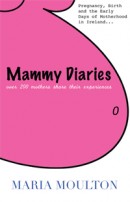
Mammy Diaries
OS: Maria, first of all, congratulations on your remarkable book, Mammy Diaries. It’s the first book that I’m aware of that really lifts the lid on what motherhood in 21st-century Ireland is like. How are you finding life as a published author so far?
MM: Thanks Orla! Well, to be perfectly honest, I’ve just swapped the busy-ness of being a stay at home mother trying to squish in time to research, write and compile a book, for the busy-ness of being a stay at home mother trying to squish in time to promote, sell and publicize a book! It’s been great fun though. I still can’t believe that it’s “out there.”
OS: Mammy Diaries is a self-published work. Did you decide to self-publish from the word go or did you consider approaching traditional print publishers first?
MM: From the start, I really liked the idea of self-publishing. Aside from the obvious benefits of working at my own pace (essential with small kids!) and having complete control over content, I also knew that the book I was putting together had a very specific audience and as such would be a lot easier to publicise then if say, I’d written a work of general fiction.
My husband was a bit nervous about the idea at the start, so for his sake I did send out a few letters of enquiry to a few traditional publishers. I never even got past the proposal stage with them, so in the end, it was self-publishing all the way! I decided to go with a company in Dublin called Original Writing and they’ve been absolutely amazing. A real pleasure to work with and very efficient, every step of the way.
OS: The publicity around the book has already been fantastic – radio slots, newspaper pieces, online PR, and your ongoing nationwide book tour. The book is also on the shelf in Easons’s, which is rare for a self-published work. How have you gone about generating publicity for the book?
MM: As you said yourself, self published works don’t tend to get into the larger, mainstream book shops, so my main goal when Mammy Diaries was published was to generate as much publicity in as short a space of time as humanly possible. The ide was to make it that much more attractive to the bigger retailers. This meant contacting journalists who I thought would be interested in the project, getting exposure in both local and national media and once I’d gathered enough clippings and podcasts, my publishers in Dublin contacted the bigger shops and “Voila!”.
The Internet has definitely been my biggest and most effective tool. Without it, the book probably wouldn’t have been written and I’d never have even considered self-publishing without it. You can do anything online. IrishPressReleases.ie allows you to contact the nation’s media in seconds and social networking sites like Twitter, Blogspot and Facebook have just opened up so many doors. It’s amazing really how far we’ve come in the last 10 or 15 years.
OS: Which channels are you finding the most effective so far for promoting your book?
MM: Well, the press coverage at the start was a huge boost . That definitely brought the book to the public’s attention. Having it in Eason’s is great because it means that it’s easily and constantly available to people. The book tour allows me to help keep the book current and to continue to introduce it to people who may not have heard about it yet. Obviously though, as I said above, it’s the internet that’s making it all happen.
OS: Mammy Diaries is currently out in print format. E-reader platforms like Kindle can bring self-published books to a much wider audience. Have you any plans to also publish Mammy Diaries for e-readers?
MM: My husband is working on it at the moment! Touch wood, it should be available in Kindle format in the next week or so.
OS: Self-publishing used to be the Cinderella of the book world. Some sources now say it’s the next big thing. What is your view of self-publishing versus the more traditional route of submitting your work to established publishers and hoping for the best?
MM: Honestly? I love it. I think that if you have the drive to get out there and put in the work to promote your book, it’s definitely worth considering. No one is going to work as hard for your book as you are. I know I’m probably sounding like a bit of a broken record, but the internet really has opened up so many doors and possibilities.
That being said, it’s called self-publishing for a reason. You are your own editor, critic, agent and publicist, and that can get a little tiring. You’re not going to feel one hundred per cent all the time and there are going to be days when you wish to God that there was a team of people behind you organizing everything for you and telling you exactly what to do next. You are going to have moments of self doubt where you wonder “Is it really any good at all? What have I done?!”
At the end of the day though, you get to put out exactly what you want to put out and not someone else’s version of what you started off writing. Hopefully, with a little luck and a lot of work, you’ll find a group of readers who connect with what you’ve written and who will look forward to hearing more from you.
OS: For many writers, their work is a labour of love. But money is key to being able to continue as a writer. Can you talk to us a little about the financial side of a venture like Mammy Diaries – did you have to invest much of your own money into getting it published and to publicise it? Do you expect to make a profit on the book?
MM: The cost of publishing varies from company to company and package to package. With the different self-publishing companies that are out there (and there are more popping up every day) you can look at paying anywhere from 1000 euro for your basic, no-frills option to several thousand euro which will buy you editorial services, consultation on cover design, and so on.
Not being made of money myself, we went for something on the more basic end of the scale publishing-wise. Aside from the cost of petrol, all of our publicity has been free, so for us there really wasn’t that much of an investment to be made.
Aside from that, we’ve just worked really hard to do as much of the grunt work as we could do ourselves. My husband learned how to do web design so he could do my website and we also designed the cover ourselves. I have a regular (if currently neglected!) blog of the same name, a Facebook group for Mammy Diaries as well as a Twitter account that I’m getting better at using. Whenever we go anywhere to do signings, I let the local media know in case it’s something they’d be interested in covering. None of this costs money, just a bit of time and effort.
I’m also lucky enough to be surrounded by a large group of friends and family who are unbelievably supportive of Mammy Diaries and do their best to promote the heck out of it, for which I’m eternally grateful!
OS: You’re currently on a nationwide book tour. How are you finding the tour? Would you recommend a book tour to other writers as part of the PR campaign for a self-published work?
MM: Definitely. It’s a great oppurtunity to meet the people who will be reading your book as well as to make contacts with book shops and libraries. Also, every launch gives you the potential for local media coverage, which is great for keeping your book in the public eye.
OS: I’ve been told that self-promotion can take as much time as writing itself, if not more. How do you go about making the time for promotion work for Mammy Diaries? Do you have any tips for other writers in this regard?
MM: Do your best to do the kind of promotion that works for you. As a mother of two small children, traditional evening champagne launch events didn’t work for me (or for that matter, for the majority of my audience!). Instead, we hold our signings in play centers where my girls can run around and play with other children and the mothers who are coming along can do the same and not have to worry about babysitters and such. The same goes with radio and print interviews – most of mine were done on the phone so I could do them from anywhere. I spoke with The Irish Times from the car while we drove around the countryside putting the girls to sleep and I did an interview with a Waterford radio station live from my kitchen in my pyjamas!
My husband was made redundant last year, which ended up being a blessing in disguise as it was his being home that gave me the freedom to really buckle down and get the last of the book finished. He’s also my chauffeur/graphic designer/web master and general go-to guy.
Aside from that, I fully admit that there was a LOT of procrastrination in the way of Facebooking, tweeting and emailing going on while I was writing Mammy Diaries. Nowadays, I use that same time to do the same things, but with a purpose. Instead of a way to procrastinate, I’m using them for promotion instead.
OS: Many thanks Maria!
***
Find Maria at http://www.mammydiaries.ie, http://mammydiaries.blogspot.com, on Facebook at Mammy Diaries Ireland and on Twitter at @mammydiaries.
(c) Curmumgeon 2011
Guest blog post: Friends of Breastfeeding
Check out my latest guest blog article, this time for Friends of Breastfeeding: http://friendsofbreastfeeding.blogspot.com/2011/05/its-all-about-milk.html.
This is Waterford
One sunny morning last September, I was strolling down the river side of the Quay here in Waterford City. The air buzzed with conversation, shouts of laughter, and people calling out to each other. Mouth-watering aromas made the head practically swim. The car parks, emptied of cars for the weekend, were packed on both sides with market stalls piled high with every possible kind of food produce. It was the Waterford Harvest Festival 2010in full swing.

Reginald's Tower and Quay, Waterford
With all the negative news to hit our City last year, it would have been no surprise if visitors had found the atmosphere on the streets to be glum and muted. Instead, they found the people of Waterford engaged in what was basically a year-long party.
For me, like other locals, the hardest part was picking what to go to. It would have been physically impossible to attend everything.
There are some highlights that have stuck in my mind. A day in early July spent at Spraoi in the Park, when it seemed like the whole City and County was in the People’s Park, sitting on the grass in the sun, listening to the live music. My husband hoisting our daughter onto his shoulders to see and hear the drummers in Arundel Square at Spraoi a month later. My then-one-year-old kicking up her feet in delight at a “Baby Boogie” dance session with Libby Seward in Garter Lane as part of SprOg, the children’s pre-Spraoi festival. My older daughter and I joining in the dance moves to “Swing Low Sweet Chariot” that Rev. Bazil Meade, leader of the London Community Gospel Choir, taught the audience at a rousing concert at the Waterford International Music Festival in November. (We still do the moves when we think nobody is looking.)
There are too many other special moments to describe: “Seussical the Musical” in the Theatre Royal at the Waterford International Festival of Light Opera; Joseph O’Connor reading from his new novel at the Imagine Arts Festival; leaning against the wall across the road from Azzurro in Dunmore East on a Saturday afternoon in August to catch the music of the Jack Grace Band playing on the restaurant terrace at the Dunmore East Bluegrass Festival.
Now that we are almost half-way through 2011, with Ireland’s biggest ever open-air banner presiding proudly over the Quay, the excitement is palpable as the City gears itself up for the Tall Ships Festival 2011. It’s going to be some party.
Speaking of the Quay, I am reminded again of that morning last September. With the parked cars replaced by rows of market stalls and the place jam-packed with people, my seven-year-old was feeling a little disoriented. She looked up at me with a puzzled expression. “Mam, where is this?”
I could not help but smile as I gestured at the scene in front of us. “This is Waterford, love. This is Waterford.”
Douze points for Denise
Things may not have gone quite as hoped for Jedward in the Eurovision, but Denise Quinn’s performance in Garter Lane theatre in Waterford on the same night, May 14th, won a standing ovation and a resounding douze points from the packed audience.

Denise Quinn, author and sole performer of "Bardot Bites" and "Lucy Bastible"
Local woman Denise is the writer and sole performer of two one-act, one-woman plays, Bardot Bites and Lucy Bastible, which ran for two sold-out nights in Waterford last week as part of a nationwide tour.
The plays are beautifully observed glimpses into the lives of two very different women. Denise’s scripts cleverly use humour to draw in the audience and make them feel an instant connection to two women at crisis points in their lives. “Bids” in Bardot Bites is a single, middle-aged, put-upon woman determined to get her life back on track after her elderly mother’s death, while Lucy Bastible is refined, well-off wife of a solicitor who unleashes her wild side after her husband’s infidelity.
While the script is sharp, witty and insightful, it is Denise Quinn’s acting skills and stage presence that made this performance truly wonderful. We, the audience, genuinely forgot that there was only one person on stage. The stage seemed to teem with characters – Leonie and Leandra, Bids’ two young, man-mad colleagues at the cheese counter in the local deli, were particularly brilliant. Denise’s depictions of the ridiculous situations in which people find themselves in daily life were a joy to behold (one scene involving a balcony bra and a roving hand in the cinema will stay in my mind forever).
The script is also a great example of that great maxim of creative writing: “Write what you know”. Not content with being an accomplished playwright and actress, Denise is also a qualified solicitor and sales assistant at a well-known cheese counter in Waterford. Both cheese and the legal world featured strongly in the scripts and the playwright’s background in both greatly added to the credibility of the plays.
Accolades are also due to the show’s director Mary Curtin, a high-profile name in Irish theatre with a long list of theatre and film credits.
Bardot Bites and Lucy Bastible went down so well on the Cork leg of the tour in April that Denise has been asked to give repeat performances there later in the summer. Let’s hope she can be convinced to do the same in her native city at the earliest opportunity.
A miscellany of magic
Even in this internet age – or maybe especially in this internet age – the printed word is still loaded with magic.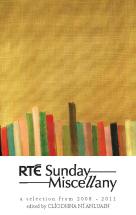
I’m beyond honoured to be included in the new RTÉ Sunday Miscellany Anthology 2008-2011, edited by Clíodhna Ní Anluain and published by New Island. Sincere thanks to Clíodhna, editor of RTÉ’s Sunday Miscellany, for finding a slot for my piece, A Tribute to Mick Lally.
I also had a completely magical evening on April 7th at the launch of the book in the National Concert Hall, Dublin. It was great to meet Clíodhna and Miriam O’Callaghan, who launched the book and said some very nice things about it. It was also really special to chat to Padraig O’Neill, award-winning production designer, who was a close friend and colleague of Mick Lally’s (including on Mick’s last screen turn in the recently-released Snap) and has some wonderful stories from their times together.
The launch was followed by a wonderful Easter Sunday Miscellany concert, with readings from the book by Kevin McAleer, Mary Molloy, Grace Wells, and Kevin Barry, among others, interspersed with music from artists including Altan, Eimear Quinn and the RTÉ Concert Orchestra. The concert was broadcast in the Sunday Miscellany slot on RTÉ Radio One over the last two weekends. Here are Part One and Part Two.
The text of my piece in the book, A Tribute to Mick Lally, is here.

 Orla Shanaghy's blog - Wait til I tell you